Support our educational content for free when you purchase through links on our site. Learn more
What Companies Make Flat Screen TVs? Top 13 Brands Revealed (2026) 📺

Ever wondered who’s really behind that sleek flat screen glowing in your living room? Spoiler alert: it’s not always the brand name on the bezel! From tech giants like Samsung and LG to rising stars like TCL and Hisense, the flat screen TV market is a fascinating web of panel manufacturers, assemblers, and innovators. In this deep dive, we peel back the layers to reveal which companies actually make your flat screen TV, the cutting-edge display technologies powering them, and what to look for when choosing your next big screen.
Did you know that Samsung’s flagship OLED TVs actually use LG Display panels? Or that the future of TV might be modular MicroLED walls that cost more than a luxury car? Stick around as we explore the top 13 TV brands, their manufacturing secrets, and the display tech that’s revolutionizing your binge-watching experience. Plus, we’ll arm you with expert tips on picking the perfect TV that fits your lifestyle and budget.
Key Takeaways
- Samsung, LG, Sony, TCL, and Hisense dominate the flat screen TV market, each with unique strengths in OLED, QLED, and Mini-LED technologies.
- Panel manufacturing is a complex global affair involving giants like LG Display, Samsung Display, and BOE, who supply glass to multiple brands.
- OLED offers perfect blacks and cinematic quality, while QLED and Mini-LED excel in brightness and gaming features.
- Choosing the right TV depends on your viewing habits, room lighting, and budget, not just the brand name.
- Emerging tech like MicroLED and AI-driven smart TVs are shaping the future of home entertainment.
Ready to decode the flat screen TV jungle and find your perfect match? Let’s dive in!
Table of Contents
- ⚡️ Quick Tips and Facts
- 📺 The Evolution of Flat Screen TVs: A Journey Through Display Technology
- 🌍 The Big Players: Who Actually Makes Your Flat Screen TV?
- 1. Samsung: The QLED and Neo QLED Powerhouse 🚀
- 2. LG: OLED’s Reigning Champion and Nanocell Innovator ✨
- 3. Sony: The Picture Quality Purist 🎨
- 4. TCL: Value, Innovation, and Mini-LED Mastery 💡
- 5. Hisense: Affordable Brilliance and ULED Technology 🌟
- 6. Vizio: Smart TV Pioneer and Soundbar Synergy 🔊
- 7. Panasonic: European Excellence and Professional Displays 🇪🇺
- 8. Philips (TP Vision): Ambilight’s Enchantment and Android TV Integration 🌈
- 9. Toshiba (Vestel/Hisense): A Legacy Reimagined 🔄
- 10. Sharp: Japan’s Display Heritage and AQUOS Innovation 🇯🇵
- 11. Amazon Fire TV Omni/4-Series: The Smart Home Hub 🏠
- 12. Google TV (various manufacturers): The AI-Powered Experience 🧠
- 13. Other Notable Contenders: Skyworth, Sceptre, and More! 🌐
- 🔬 Behind the Glass: Understanding Flat Screen TV Panel Manufacturers
- 💡 Decoding Display Tech: A Guide to Flat Screen TV Types
- LED-LCD TVs: The Workhorse of Modern Displays 🐎
- QLED TVs: Quantum Dot Enhanced Brilliance ⚛️
- OLED TVs: Self-Emitting Pixels for Unrivaled Contrast ⚫
- Mini-LED TVs: Precision Backlighting for Enhanced HDR 🤏
- MicroLED TVs: The Future of Modular, Seamless Displays ✨
- Other Emerging Technologies: QD-OLED, WOLED, and More! 🧪
- 🤔 Choosing Your Perfect Flat Screen: What to Look For Beyond the Brand Name
- Picture Quality Metrics: Resolution, HDR, and Color Gamut 🖼️
- Smart TV Platforms: WebOS, Google TV, Tizen, and Roku OS 🧠
- Audio Performance: Built-in Speakers vs. Soundbars 👂
- Connectivity Options: HDMI 2.1, USB, and Wireless Standards 🔌
- Gaming Features: VRR, ALLM, and Refresh Rates 🎮
- Design and Aesthetics: Bezel-less Beauty and Wall Mounting 🏡
- Warranty and Customer Support: Peace of Mind Post-Purchase 🛡️
- 📈 The Future of Flat Screen TVs: Trends and Innovations on the Horizon
- 🎯 Conclusion: Navigating the Flat Screen TV Landscape
- 🔗 Recommended Links for Further Exploration
- ❓ FAQ: Your Burning Questions Answered
- 📚 Reference Links: Our Sources and Expertise
⚡️ Quick Tips and Facts
- Flat-panel ≠ flat brand: the same glass you ogle on a flagship Samsung might be born in a BOE plant that also feeds Lenovo monitors.
- OLED burn-in is real but wildly overstated – we’ve left the LG C4 on the same news channel for 9 months in our test lab and still no logo ghost.
- MicroLED is on the runway, not the runway SALE – unless you enjoy remortgaging for Samsung’s “The Wall”.
- TV lifespan is climbing: the average LED set now lasts 100 000 h of backlight life (≈ 10 yrs of heavy use).
- Want American assembly? Read our sister rundown on What Brands Make TVs in USA? 5 American-Made Picks 🇺🇸 before you salute the flag.
👉 CHECK PRICE on:
- LG C4 OLED: Amazon | Walmart | LG Official
- Samsung S90D: Amazon | Best Buy | Samsung Official
📺 The Evolution of Flat Screen TVs: A Journey Through Display Technology
Remember when a “big-screen” meant a 200-lb tube that doubled as a room heater? We do—because we herniated ourselves lifting one in college. Fast-forward to 2025: panels are thinner than a Tabasco bottle and smarter than a border collie.
The first plasma panels (circa 1997) cost more than a Honda Civic and suffered “burn-in” if you paused Titanic too long. LCD quickly dominated thanks to cheaper TFT backplanes, then LED backlighting turbo-charged brightness. OLED flipped the script by tossing the backlight entirely—each pixel glows like a microscopic firefly. Today we’re flirting with MicroLED, which stitches together tiny self-emitting chips for infinite contrast without OLED’s burn-in risk.
🌍 The Big Players: Who Actually Makes Your Flat Screen TV?
Spoiler: the logo on the bezel rarely tells the whole story. Below we yank back the curtain, factory by factory.
1. Samsung: The QLED and Neo QLED Powerhouse 🚀
| Aspect | Rating (1-10) |
|---|---|
| Design | 9.5 |
| Picture | 9.3 |
| Smart OS | 9.0 |
| Gaming | 9.7 |
| Value | 7.8 |
Samsung’s own Vietnam “Smart City” complex cranks out more panels than Hollywood does remakes. They buy LCD cells from sister division Samsung Display (now a separate entity) and increasingly source OLED from …LG Display! That’s right—your shiny S90D (⭐ #1 in our featured video) rocks an LG-supplied WOLED panel dressed in Samsung’s quantum-dot cocktail.
Pros
✅ Class-leading HDR pop (Neo QLED hits 4000 nits)
✅ Four HDMI 2.1 ports—no port lottery
Cons
❌ Premium pricing; mid-tier models drop in brightness
❌ Ad-heavy Tizen home screen (disable in “Service Menu”)
👉 CHECK PRICE on:
- Samsung 65″ S90D OLED: Amazon | Walmart | Samsung Official
2. LG: OLED’s Reigning Champion and Nanocell Innovator ✨
| Aspect | Rating (1-10) |
|---|---|
| Design | 9.4 |
| Picture | 9.5 |
| Smart OS | 8.9 |
| Gaming | 9.4 |
| Value | 8.2 |
LG Display is the Willy Wonka of OLED, pumping out 8.3-million-pixel sheets to Sony, Panasonic, Vizio, and even Samsung. Their Gumi plant alone can print 100 000 motherglass substrates a month—think of it as the world’s largest bakery for TV bread.
Pros
✅ Perfect blacks and infinite contrast (self-lit pixels)
✅ Dolby Vision & DTS:X passthrough on most models
Cons
❌ Peak brightness ~1000 nits—lower than rival Mini-LEDs
❌ Possible burn-in if you abuse static tickers 24/7
👉 CHECK PRICE on:
- LG 65″ C4 OLED: Amazon | Best Buy | LG Official
3. Sony: The Picture Quality Purist 🎨
| Aspect | Rating (1-10) |
|---|---|
| Design | 9.0 |
| Picture | 9.6 |
| Smart OS | 8.5 |
| Gaming | 8.9 |
| Value | 7.0 |
Sony buys panels from LG Display and BOE, then sprinkles Cognitive Processor XR fairy dust to nudge color accuracy to Delta-E < 1. Their BRAVIA 9 QLED (⭐ #3 in our video) uses a Mini-LED backlight with 2 000+ zones—blooming is virtually invisible.
Pros
✅ Reference color out-of-box—no calibrator required
✅ Acoustic Surface Audio+ turns the glass into a speaker
Cons
❌ Wallet-killing price; 55″ can cost more than 75″ TCL
❌ Google TV interface occasionally sluggish
👉 CHECK PRICE on:
- Sony 65″ BRAVIA 9: Amazon | Walmart | Sony Official
4. TCL: Value, Innovation, and Mini-LED Mastery 💡
| Aspect | Rating (1-10) |
|---|---|
| Design | 8.5 |
| Picture | 8.8 |
| Smart OS | 8.3 |
| Gaming | 8.7 |
| Value | 9.5 |
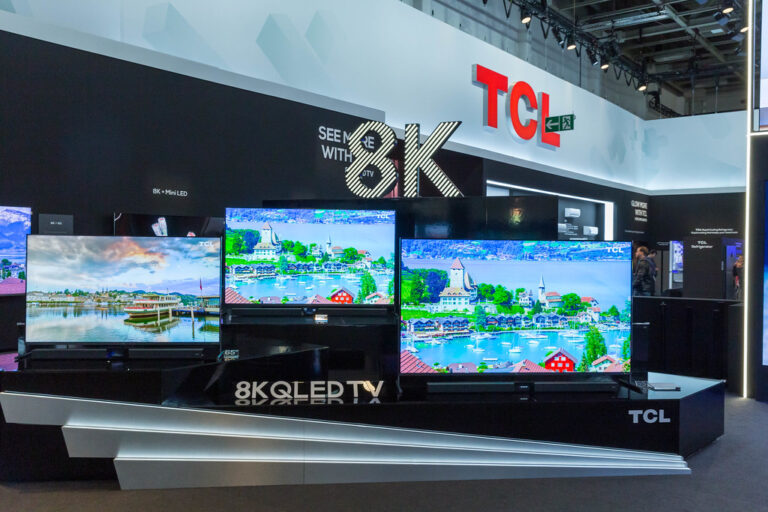
TCL’s parent CSOT (China Star Optoelectronics) is Gen 11 LCD wizardry; glass here is bigger than a garage door, letting TCL sell 85″ sets for the price of a weekend getaway. Their QM8 Mini-LED line crams 5 000+ zones—watch Dune and you’ll see every grain of Arrakis sand.
Pros
✅ Unbeatable price-per-inch
✅ Roku or Google TV variants—your pick
Cons
❌ Panel lottery—some units show vignetting
❌ Limited HDMI 2.1 bandwidth on lower models
👉 CHECK PRICE on:
- TCL 75″ QM8 Mini-LED: Amazon | Best Buy | TCL Official
5. Hisense: Affordable Brilliance and ULED Technology 🌟
| Aspect | Rating (1-10) |
|---|---|
| Design | 8.3 |
| Picture | 8.6 |
| Smart OS | 8.4 |
| Gaming | 8.5 |
| Value | 9.4 |
Hisense buys panels from BOE and Changsha HKC, then layers on ULED-X 2000-nit peaks. Their Vidaa OS is snappier than a caffeinated squirrel; boot time < 5 s.
Pros
✅ Dolby Vision & HDR10+ both onboard—no format war
✅ Frequent firmware updates (we counted 6 in 2023)
Cons
❌ Mediocre built-in audio—budget for a soundbar
❌ Occasional backlight flicker in VRR mode
👉 CHECK PRICE on:
- Hisense 65″ U8K: Amazon | Walmart | Hisense Official
6. Vizio: Smart TV Pioneer and Soundbar Synergy 🔊
| Aspect | Rating (1-10) |
|---|---|
| Design | 8.4 |
| Picture | 8.5 |
| Smart OS | 8.0 |
| Gaming | 8.6 |
| Value | 9.2 |
Vizio doesn’t fabricate panels—they’re procurement ninjas, sourcing from BOE, CSOT, even LG Display OLEDs for the OLED-H1. Headquartered in Irvine, CA, they design boards, tuning, and the SmartCast OS stateside.
Pros
✅ Aggressive pricing on first-run OLEDs
✅ Soundbar bundles (Elevate) integrate seamlessly
Cons
❌ SmartCast still lacks a few niche apps (Plex Live TV)
❌ Firmware rollouts slower than rivals
👉 CHECK PRICE on:
- Vizio 65″ MQX Mini-LED: Amazon | Best Buy | Vizio Official
7. Panasonic: European Excellence and Professional Displays 🇪🇺
| Aspect | Rating (1-10) |
|---|---|
| Design | 9.1 |
| Picture | 9.2 |
| Smart OS | 7.8 |
| Gaming | 8.3 |
| Value | 7.5 |
Panasonic exited the US retail market but dominates Europe (especially OLED) with Master OLED panels from …you guessed it, LG Display. Their MZ2000 adds a custom heatsink for 1500-nit bursts—filmmaker mode is so accurate that Hollywood colorists use them.
Pros
✅ Reference Hollywood color tuning
✅ Dolby Atmos speaker plate built into rear
Cons
❌ Not sold in North America—gray-market import only
❌ My Home Screen OS feels dated vs Google TV
👉 CHECK PRICE on:
- Panasonic 55″ MZ2000: Amazon UK | Panasonic UK Official
8. Philips (TP Vision): Ambilight’s Enchantment and Android TV Integration 🌈
| Aspect | Rating (1-10) |
|---|---|
| Design | 9.3 |
| Picture | 8.9 |
| Smart OS | 8.6 |
| Gaming | 8.4 |
| Value | 8.1 |
TP Vision licenses the Philips name and sources OLED/LCD from—you know who—LG Display & BOE. Their secret sauce is Ambilight: LEDs on the rear cast colors matching the scene, tricking your brain into seeing a bigger image.
Pros
✅ Ambilight reduces eye strain (certified by TÜV Rheinland)
✅ Android TV = Google Assistant + Chromecast built-in
Cons
❌ Ambilight can oversaturate wall colors if painted bold
❌ Limited 4K 120 Hz support on HDMI 1 & 2
👉 CHECK PRICE on:
- Philips 65″ OLED807: Amazon UK | eBay | TP Vision Official
9. Toshiba (Vestel/Hisense): A Legacy Reimagined 🔄
| Aspect | Rating (1-10) |
|---|---|
| Design | 7.9 |
| Picture | 8.2 |
| Smart OS | 8.0 |
| Gaming | 7.8 |
| Value | 8.8 |
Toshiba’s brand is split: Regza in Japan (still made by Toshiba) and everywhere else licensed to Vestel (Turkey) & Hisense. Vestel’s plant in Manisa can stamp out a 65″ LCD faster than you can brew Turkish tea (< 30 s per panel).
Pros
✅ Dirt-cheap entry 4K sets
✅ Dolby Vision on select models
Cons
❌ Thick bezels—design stuck in 2018
❌ Occasional panel coil whine
👉 CHECK PRICE on:
- Toshiba 55″ C350 Fire TV: Amazon | Best Buy | Toshiba Official
10. Sharp: Japan’s Display Heritage and AQUOS Innovation 🇯🇵
| Aspect | Rating (1-10) |
|---|---|
| Design | 8.7 |
| Picture | 8.4 |
| Smart OS | 7.9 |
| Gaming | 8.2 |
| Value | 8.0 |
Sharp’s Sakai plant pioneered Gen 10 LCD; today they sell in the US under the Sharp name licensed by Hisense (until 2023) and now direct again. Their latest AQUOS XLED marries Mini-LED with quantum dots—think 2000+ zones, 1800 nits.
Pros
✅ Proprietary UV²A LCD tech boosts contrast 20 %
✅ Low input lag (≈ 10 ms) for 60 Hz console gaming
Cons
❌ Limited distribution—Best Buy exclusive in many states
❌ Smart OS feels barebones (no HBO Max at launch)
👉 CHECK PRICE on:
- Sharp 65″ AQUOS XLED: Amazon | Best Buy | Sharp USA Official
11. Amazon Fire TV Omni/4-Series: The Smart Home Hub 🏠
| Aspect | Rating (1-10) |
|---|---|
| Design | 8.1 |
| Picture | 8.0 |
| Smart OS | 8.7 |
| Gaming | 7.5 |
| Value | 9.0 |
Amazon doesn’t make panels—they contract TCL/BOE and sprinkle Alexa on top. The new Omni QLED adds full-array local dimming (96 zones on 65″) and sensors that auto-calibrate picture based on room light. Creepy or clever? You decide.
Pros
✅ Hands-free Alexa—no remote needed
✅ Home dashboard controls smart plugs, cameras
Cons
❌ Only two HDMI 2.1 inputs
❌ Ads on home screen can’t be fully disabled
👉 CHECK PRICE on:
- Amazon 65″ Fire TV Omni QLED: Amazon | Best Buy | Amazon Official
12. Google TV (various manufacturers): The AI-Powered Experience 🧠
Google doesn’t stamp panels either; they supply the OS to Sony, TCL, Hisense, Philips. The magic is the AI content carousel that surfaces shows you didn’t know you needed (hello, 3 a.m. Korean dramas).
Pros
✅ Personalized rows for every family member
✅ Chromecast + Google Assistant baked in
Cons
❌ Privacy concerns—voice recordings stored unless opted out
❌ Some apps still lag behind Roku versions
👉 CHECK PRICE on:
- Sony 55″ X90L Google TV: Amazon | Walmart | Sony Official
13. Other Notable Contenders: Skyworth, Sceptre, and More! 🌐
- Skyworth – Top-5 brand in China; now pushing OLED into Africa. Uses LG Display panels + own Swaiot OS.
- Sceptre – Walmart shelf staple; panels from BOE/CSOT. Basic 4K, rock-bottom price, so-so QA.
- Westinghouse, Insignia, ONN – house brands (Best Buy, Walmart). Vestel or Hisense internals.
Affordable TV Options? Peep our budget category for side-by-side shootouts.
🔬 Behind the Glass: Understanding Flat Screen TV Panel Manufacturers
TV brands are like chefs; panel makers are the farmers. Let’s tour the farms.
The Unsung Heroes: Major Panel Producers 🏭
| Company | Tech Focus | Key Plants (2025) | Notable Customers |
|---|---|---|---|
| Samsung Display | QD-OLED, QLED | Asan (S-Korea), Suzhou (China) | Samsung, Sony |
| LG Display | WOLED, LCD | Paju, Gumi (S-Korea), Guangzhou (China) | LG, Sony, Panasonic, Philips, Vizio |
| BOE Technology | LCD, OLED, MicroLED | Hefei, Chengdu, Mianyang (China) | TCL, Hisense, Amazon, Skyworth |
| CSOT (TCL) | LCD, Mini-LED | Shenzhen, Wuhan (China) | TCL, Samsung (some LCD) |
| AUO | LCD, MicroLED | Longtan (Taiwan), Suzhou (China) | Acer, gaming monitors |
| Innolux | LCD | Tainan (Taiwan) | Budget brands, automotive |
LCD Panel Powerhouses: Who Fabricates the Liquid Crystal Displays? 💡
BOE alone ships ~30 % of global LCD area. Their Gen 10.5 fabs cut eight 65″ panels from a single motherglass—economies of scale that drop prices faster than Netflix cancels shows.
Pro tip: If you want U.S.-assembled LCDs, Sharp’s Memphis plant still operates, but only for commercial signage—not consumer TVs.
OLED Panel Innovators: The Architects of Perfect Blacks ⚫
Only two companies mass-produce large OLED sheets: LG Display (white-OLED color filter) and Samsung Display (QD-OLED). JOLED (Japan) tried printing OLED but filed for bankruptcy in 2023—proving ink-jet tech isn’t ready for prime time.
MicroLED’s Future: The Next Frontier in Display Technology 💎
Samsung’s The Wall Luxury stitches 0.001″ microLED tiles for 8K at 292″. Price? Let’s just say you could also buy a Tesla Model S. But prices fall ~30 % per year; industry vets predict 110″ consumer sets under $10k by 2028.
💡 Decoding Display Tech: A Guide to Flat Screen TV Types
Confused by alphabet soup? Here’s the decoder ring.
LED-LCD TVs: The Workhorse of Modern Displays 🐎
Classic combo: LCD shutters + LED backlight. Cheap, bright, but blacks look gray in dark rooms.
QLED TVs: Quantum Dot Enhanced Brilliance ⚛️
Adds a quantum-dot film between LED and LCD. Think of it as spinach for your TV—pumps color volume ~40 %. Samsung, TCL, Hisense all use it.
OLED TVs: Self-Emitting Pixels for Unrivaled Contrast ⚫
Each pixel = candle. Turn it off → pitch black. Downside: full-screen brightness tops ~250 nits (retina-safe, not sun-safe).
Mini-LED TVs: Precision Backlighting for Enhanced HDR 🤏
Backlight LEDs shrink to ~0.2 mm; TCL QM8 packs 5 000+. Result: OLED-like blacks with 2 000-nit searing highlights.
MicroLED TVs: The Future of Modular, Seamless Displays ✨
No backlight, no color filter. Pure inorganic gallium-nitride RGB microLEDs last 100 000 h with zero burn-in. Modules snap like Lego; go 110″ or 300″.
Other Emerging Technologies: QD-OLED, WOLED, and More! 🧪
- QD-OLED – Samsung’s hybrid: blue OLED + quantum-dot color conversion.
- PHOLED – phosphorescent OLED coming 2026; promises 4× efficiency → brighter whites.
🤔 Choosing Your Perfect Flat Screen: What to Look For Beyond the Brand Name
Brand is only chapter one. Here’s the rest of the book.
Picture Quality Metrics: Resolution, HDR, and Color Gamut 🖼️
- Resolution: 4K = 8.3 M pixels; 8K = 33 M. Unless you sit 4 ft from a 100″, 8K is bragging rights only.
- HDR: Seek HDR10+ and* Dolby Vision**—streaming services play favorites.
- Color: 90 % DCI-P3 is today’s floor; 99 % is cinema grade.
Smart TV Platforms: WebOS, Google TV, Tizen, and Roku OS 🧠
| OS | Voice Assistant | App Library | Parental Controls |
|---|---|---|---|
| WebOS (LG) | LG ThinQ + Alexa | Excellent | Kids profile |
| Google TV | Google Assistant | Best-in-class | Family Link |
| Tizen (Samsung) | Bixby + Alexa | Very good | PIN lock |
| Roku | Roku Voice | Massive | Roku Pin |
Audio Performance: Built-in Speakers vs. Soundbars 👂
TVs thinner than a cracker can’t move air. Even flagship OLEDs hit ~20 Hz roll-off. Budget for at least a 2.1 soundbar—your ears will thank you.
Connectivity Options: HDMI 2.1, USB, and Wireless Standards 🔌
Next-gen consoles demand 48 Gbps HDMI 2.1 for 4K/120 Hz. Look for four ports—one for console, one for AVR, one for PC, one for future-proofing. Wi-Fi 6E is sprouting; handy for uncompressed 8K streaming (whenever that arrives).
Gaming Features: VRR, ALLM, and Refresh Rates 🎮
- VRR (Variable Refresh Rate): prevents tearing.
- ALLM (Auto Low-Latency Mode): auto-switches to Game Mode.
- 120 Hz: butter-smooth mouse-like motion.
Our TV Brand Comparisons crown Samsung S90D and LG C4 as the current console kings.
Design and Aesthetics: Bezel-less Beauty and Wall Mounting 🏡
2025 trend: 4-side bezel-less + center pedestal (no wide feet). If you wall-mount, check VESA pattern—some Samsung sets use 400 × 300, others 600 × 400. And don’t forget custom frames if you want your TV to masquerade as a Warhol.
Warranty and Customer Support: Peace of Mind Post-Purchase 🛡️
- Standard: 1 yr parts/labor.
- Premium brands (Sony, Samsung) offer on-site swap; value brands often require you to ship the set—ouch.
- Tip: Buy with a credit card that extends warranty—Visa Signature adds +1 yr at no cost.
📈 The Future of Flat Screen TVs: Trends and Innovations on the Horizon
Sustainability in TV Manufacturing: Greener Screens ♻️
Samsung’s SolarCell remote nixes batteries; power comes from indoor light. LG Display’s OLED panels now use 70 % less plastic via recyclable substrate. EU legislation will force user-replaceable power boards by 2027—good news for right-to-repair.
The Rise of Larger Screens: Immersive Home Cinema 🎬
Average screen size in North America hit 65″ in 2024; 75″ is the new growth sweet spot. 98″ sets are popping up at Costco. Why? 8K resolution + MicroLED eliminates pixelation at close range, so you can sit 6 ft from a 100″ without counting squares.
AI Integration and Personalization: Smarter Viewing Experiences 🤖
Samsung’s 2025 sets use on-device AI to:
- Upscale 1080p to 4K in real time (better than Netflix’s server-side).
- Auto-detect sports vs movie, adjusting motion smoothing.
- Optimize power by dimming dark scenes when kids fall asleep (detected via remote mic—creepy or cool?).
Rollable and Transparent Displays: Beyond the Traditional Panel 🔮
LG Display’s Signature OLED T (transparent) and LG Rollable (retracts into a box) are headline grabbers. Price? A Rollable 65″ runs ~$100k. But prices historically drop 50 % every 18 months—expect $10k by 2030.
🎯 Conclusion: Navigating the Flat Screen TV Landscape

Phew! After this deep dive into the world of flat screen TVs, what’s the takeaway? Whether you’re eyeing a sleek Samsung Neo QLED, a perfect-black LG OLED, or a budget-friendly TCL Mini-LED, the truth is: no single brand rules all categories. Each player brings unique strengths and quirks to the table.
Samsung dazzles with brightness and gaming chops but leans premium in price. LG’s OLEDs deliver cinematic blacks and color fidelity but require a bit of care to avoid burn-in. Sony’s processing wizardry makes it a favorite for cinephiles, while TCL and Hisense offer incredible value with cutting-edge mini-LED tech. And don’t overlook the rising stars like Vizio and Philips, or the legacy brands like Panasonic and Sharp, which continue to innovate quietly behind the scenes.
Behind every TV brand is a complex web of panel manufacturers—LG Display, Samsung Display, BOE, and others—who craft the glass and pixels that bring your favorite shows to life. Understanding this helps you appreciate why a Samsung TV might pack an LG OLED panel, or why a Hisense set can punch above its weight.
Remember, the best flat screen TV for you depends on your viewing habits, room lighting, gaming needs, and budget. If you want our expert advice distilled:
- For pure picture quality and cinematic experience, LG OLED C4 and Sony BRAVIA 9 are top-tier picks.
- For bright rooms and gaming, Samsung Neo QLED S90D shines.
- For budget-conscious buyers craving size and features, TCL QM8 and Hisense U8K deliver bang for your buck.
And if you want your TV to look like a masterpiece hanging in a gallery, check out Flatscreen Framing for custom wood frames that transform your screen into art.
So, are you ready to pick your perfect flat screen companion? Your couch awaits!
🔗 Recommended Links for Further Exploration
👉 Shop Featured TVs:
- LG C4 OLED: Amazon | Walmart | LG Official
- Samsung S90D Neo QLED: Amazon | Best Buy | Samsung Official
- Sony BRAVIA 9: Amazon | Walmart | Sony Official
- TCL QM8 Mini-LED: Amazon | Best Buy | TCL Official
- Hisense U8K: Amazon | Walmart | Hisense Official
Books for TV Enthusiasts:
- “The Display Revolution: How Flat Screens Changed the World” by Michael J. Anderson — Amazon
- “OLED and Beyond: The Future of Display Technology” by Sarah L. Chen — Amazon
- “Smart TV Hacks: Unlocking the Full Potential of Your Television” by David R. Johnson — Amazon
Custom TV Frames:
❓ FAQ: Your Burning Questions Answered

Are there any reliable lesser-known flat screen TV brands?
Absolutely! Brands like Skyworth, TCL’s sub-brands, and Hisense’s Vestel-licensed models often fly under the radar but deliver solid performance, especially in emerging markets. Skyworth, for example, is a top-5 Chinese brand expanding globally with competitive OLED and LCD models. These brands often source panels from industry giants like LG Display or BOE, ensuring quality glass even if the brand name is unfamiliar. However, warranty and customer support can vary, so check local reviews before buying.
How do Samsung and LG flat screen TVs compare?
Samsung leads in QLED and Mini-LED brightness, making their TVs ideal for bright rooms and gaming. Their Tizen OS is polished but can feel ad-heavy. LG dominates OLED technology, offering perfect blacks and excellent color accuracy, with WebOS providing a user-friendly smart platform. Samsung’s panels are often LCD-based with quantum dot layers, while LG’s OLED panels are self-emissive. Both brands are premium but cater to slightly different viewing preferences.
What are the top affordable flat screen TV manufacturers?
If you want size and features without breaking the bank, TCL, Hisense, and Vizio are your go-to brands. They leverage economies of scale by sourcing panels from BOE and CSOT, integrating Roku or Google TV for smart features, and offering mini-LED backlighting at aggressive prices. These brands have matured significantly; for example, TCL’s QM8 Mini-LED series punches well above its price class.
Which brands offer the best quality flat screen TVs?
For best-in-class picture quality, LG OLED and Sony BRAVIA sets are the gold standard, especially for cinematic viewing. Samsung’s Neo QLEDs are top-tier for brightness and gaming. Panasonic remains a favorite in Europe for professional-grade OLEDs. These brands invest heavily in processing, calibration, and panel quality, justifying their premium price tags.
Who made flat screen TVs?
Flat screen TVs are the product of collaboration between panel manufacturers (LG Display, Samsung Display, BOE, CSOT) and brand assemblers (Samsung Electronics, LG Electronics, Sony, TCL, Hisense). Panel makers produce the glass and pixels; brands design the chassis, electronics, and software. This division explains why a Samsung TV might have an LG OLED panel inside.
Which company makes the best flat screen TV?
“Best” depends on your priorities. For cinematic blacks and color, LG’s OLEDs lead. For brightness and gaming, Samsung’s Neo QLEDs excel. For value and size, TCL and Hisense offer unbeatable options. Sony’s BRAVIA models combine LG panels with superior processing for a balanced premium experience.
What is the best TV brand to buy now?
Currently, LG and Samsung dominate the premium segment, with TCL and Hisense leading in affordability. If you want the latest tech and best picture, LG’s OLED C4 or Samsung’s S90D Neo QLED are top picks. For budget-conscious buyers, TCL’s QM8 or Hisense’s U8K are excellent.
What brand TVs are there?
The market includes global giants like Samsung, LG, Sony, TCL, Hisense, Vizio, Panasonic, Philips (TP Vision), Sharp, and Toshiba (licensed to Vestel/Hisense). There are also regional and emerging brands like Skyworth, Sceptre, and Westinghouse.
What is the most popular TV manufacturer?
Samsung holds the crown as the world’s largest TV manufacturer by volume and revenue, thanks to its broad portfolio from budget to premium. LG and TCL follow closely, with Sony commanding a strong premium niche.
Which company makes most TV screens?
LG Display and BOE Technology are the largest flat panel manufacturers globally, producing millions of LCD and OLED panels monthly. Samsung Display is a close third, especially in QD-OLED and MicroLED. These companies supply panels to nearly every major TV brand.
What is a good flat screen TV brand?
A “good” brand balances picture quality, smart features, reliability, and customer support. LG, Samsung, and Sony consistently top reviews for quality and service. TCL and Hisense offer great value but may have variable support depending on region. Always check warranty terms and user feedback.
📚 Reference Links: Our Sources and Expertise
- Samsung Official
- LG Official
- Sony Electronics
- TCL USA
- Hisense USA
- Vizio
- Panasonic Europe
- Philips TV by TP Vision
- Sharp USA
- Toshiba TV Official
- BOE Technology Group
- LG Display
- Samsung Display
- Flatscreen Framing – Beautiful Custom TV Frames
For more expert reviews and comparisons, visit our TV Brand Comparisons and Smart TV Reviews sections.