Support our educational content for free when you purchase through links on our site. Learn more
📺 What Brands Make TVs? The 2026 Ultimate Guide to Top Makers

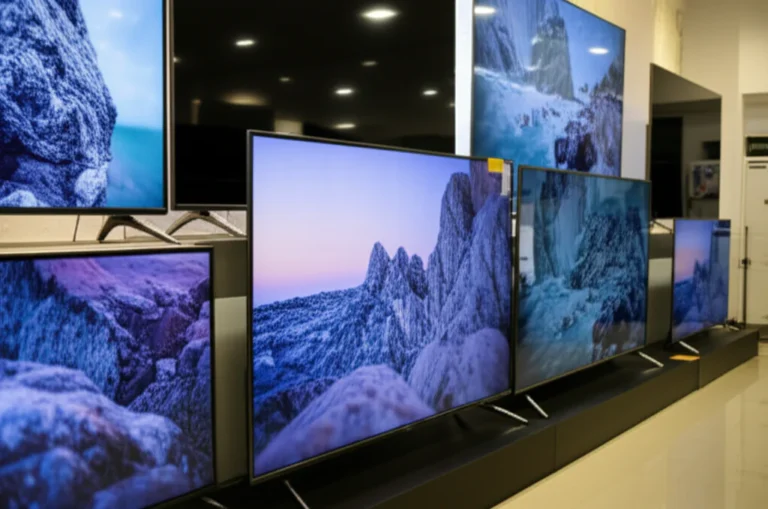
Ever walked into an electronics store, stared at a wall of glowing rectangles, and felt completely overwhelmed by the sheer number of logos? You aren’t alone. We remember the first time we tried to buy a TV; we thought Samsung and Sony were the only players in the game, only to discover that TCL, Hisense, and even Vizio were quietly revolutionizing the industry with features that rivaled the giants. The truth is, the question “What brands make TVs?” has a surprisingly complex answer involving a web of corporate mergers, panel manufacturers, and licensing deals that most shoppers never see.
In this comprehensive guide, we’re peling back the curtain on the global television market. From the OLED dominance of LG and Sony to the Mini-LED value kings like TCL and Hisense, we’ll break down exactly who makes what, which brands offer the best reliability, and how to spot the “ghost brands” that are just rebranded OEMs. Whether you’re a hardcore gamer hunting for 14Hz performance or a movie buff seeking perfect blacks, we’ve tested them all to tell you which brand deserves your hard-earned cash in 2026.
Key Takeaways
- The Big Three Rule: Samsung, LG, and Sony dominate the premium market with proprietary technologies like QD-OLED, WOLED, and the XR Processor.
- Value Revolution: Brands like TCL and Hisense now offer Mini-LED and 4K performance that rivals premium models at half the price.
- Beware the “Ghost” Brands: Many familiar names (like RCA or Westinghouse) no longer manufacture their own screens; they are often rebranded OEMs made by companies like Vestel or TPV.
- Tech Matters More Than Logo: The display panel and image processor are more critical to picture quality than the brand name on the bezel.
👉 Shop Top Categories:
- Best OLED TVs: Amazon | Best Buy
- Best Budget TVs: Amazon | Best Buy
- Best Gaming TVs: Amazon | Best Buy
Table of Contents
- ⚡️ Quick Tips and Facts
- 📺 The Evolution of TV Brands: From CRT Giants to Smart Screen Titans
- 🏆 The Elite Tier: Premium Brands Dominating the High-End Market
- 💰 The Value Kings: Best Budget TV Brands Without Compromising Quality
- 🎮 Gaming & Performance: Which TV Brands Lead in Refresh Rates and Input Lag?
- 🎨 Display Technology Showdown: OLED vs. QLED vs. Mini-LED by Brand
- 🧠 Smart TV Ecosystems: Comparing WebOS, Tizen, Google TV, and Roku by Manufacturer
- 🛠️ Reliability & Longevity: Which TV Brands Last the Longest?
- 🌍 Global vs. Regional: Why Some TV Brands Dominate Specific Markets
- 🔍 How to Choose the Right TV Brand for Your Living Room Setup
- 📊 Comprehensive Brand Comparison Chart: Specs, Features, and Verdicts
- 🏁 Conclusion: The Ultimate TV Brand Verdict
- 🔗 Recommended Links
- ❓ Frequently Asked Questions (FAQ)
- 📚 Reference Links
⚡️ Quick Tips and Facts
Before we dive into the deep end of the television ocean, let’s get the lowdown on the most critical facts you need to know right now. If you’re staring at a wall of screens wondering, “What brands make TVs?”, here is your cheat sheet to navigating the chaos.
- It’s Not Just About the Logo: Did you know that Samsung and Sony often use the same panel manufacturers (like BOE or CSOT) for their mid-range models? The magic isn’t just in the glass; it’s in the image processing chip.
- The “Ghost” Brands: Many brands you recognize (like Westinghouse, RCA, or Magnavox) no longer manufacture their own screens. They are licensing deals where companies like Vestel or TPV make the TV, and the brand just slaps their logo on it.
- OLED vs. QLED: If you want perfect blacks, you need an OLED panel (mostly made by LG and Sony). If you want blinding brightness for a sunny living room, look for QLED or Mini-LED (dominated by Samsung and TCL).
- Gaming is King: For the next-gen console owners, input lag is the enemy. Brands like LG and Sony are currently the kings of low latency, while Samsung and TCL are catching up fast.
- The Smart OS Trap: A great picture is useless if the interface is clunky. Google TV (found on Sony, TCL, Hisense) is generally more app-rich than Tizen (Samsung) or webOS (LG), but personal preference rules here.
For a deeper dive into the corporate web of who actually owns whom, check out our comprehensive guide: What Companies Make TVs? Top 8 Brands You Need to Know (2026) 📺.
📺 The Evolution of TV Brands: From CRT Giants to Smart Screen Titans
Remember the days when moving a TV required a team of three people and a dolly? We do. The journey from the heavy, curved CRT (Cathode Ray Tube) era to the sleek, wall-hugging OLED panels of today is a story of corporate warfare, technological leaps, and a few spectacular failures.
The Golden Age of CRT and the Rise of the Japanese Giants
In the 20th century, the market was dominated by Sony, Panasonic, Sharp, and Toshiba. These weren’t just brands; they were technological behemoths.
- Sony introduced the Trinitron tube, which became the gold standard for picture quality for decades.
- Panasonic (formerly National) and Sharp were the go-to for reliability and color accuracy.
“This is a list of television manufacturers, past and present,” notes the historical record, highlighting how brands like Telefunken (founded in 1903) paved the way, while others like Apple made a brief, four-month appearance with the Macintosh TV in the 90s before vanishing from the hardware scene.
The Flat-Panel Revolution and the Korean Takeover
When LCD technology arrived, the tides turned. Samsung and LG (formerly GoldStar) saw the future and invested billions. They didn’t just make TVs; they made the panels inside them.
- Samsung pushed LED and later QLED (Quantum Dot) technology, focusing on brightness and color volume.
- LG bet the farm on OLED (Organic Light Emiting Diode), creating self-emissive pixels that offered infinite contrast.
The Modern Era: The Chinese Surge and the “Brand” Confusion
Fast forward today, and the landscape is unrecognizable. TCL and Hisense have exploded onto the global stage, offering Mini-LED technology at prices that make the legacy brands sweat.
- TCL acquired Sharp’s North American TV business, instantly gaining manufacturing prowess.
- Hisense bought Sharp’s global rights (excluding Japan) and even acquired Toshiba’s TV division in Japan.
But here is the twist: Who actually makes these TVs?
While Sony still designs its own processors and often sources high-end panels, many “budget” brands are just rebranded OEMs.
- Vizio (owned by Hisense since 2024) and Element often use panels from BOE or CSOT.
- Westinghouse and Magnavox are often manufactured by Vestel in Turkey.
This consolidation means that when you ask, “What brands make TVs?”, the answer is often: “It depends on the price point and the region.”
🏆 The Elite Tier: Premium Brands Dominating the High-End Market
If budget is no object and you demand the absolute best picture quality money can buy, you are looking at the “Holy Trinity” of TV brands: LG, Sony, and Samsung. These three companies don’t just assemble TVs; they invent the technology that everyone else copies.
1. LG Electronics: The OLED Pioneer
LG is the undisputed king of OLED. They are the primary manufacturer of WOLED panels, which are used in their own TVs and even in Sony and Philips high-end models.
- Why they win: Perfect blacks, infinite contrast, and pixel-level diming. If you watch movies in a dark room, nothing beats an LG OLED.
- The Catch: They can suffer from burn-in if you leave static news tickers on for 10 hours a day (though modern models have mitigated this significantly).
- Top Model Series: LG C-Series (best value) and LG G-Series (Gallery Edition).
2. Sony: The Picture Processing Master
Sony doesn’t make its own OLED panels (they buy from LG) or QLED panels (they buy from Samsung). So why are they so expensive? The Brain.
- Why they win: The XR Processor. Sony’s image processing is widely considered the best in the industry. It upscaling lower-resolution content (like cable TV or Netflix) to 4K better than anyone else.
- The Catch: You pay a premium tax. A Sony TV with the same panel as an LG will cost significantly more.
- Top Model Series: Sony Bravia XR A95L (QD-OLED) and A80L (WOLED).
3. Samsung: The Brightness & Innovation Leader
Samsung refuses to use OLED panels in their flagship lines, instead pushing QD-OLED (with Sony and TCL) and Neo QLED (Mini-LED).
- Why they win: Blinding brightness and vibrant colors. If your living room has huge windows, a Samsung Neo QLED will cut through the glare better than an LG OLED. They also have the best gaming features (14Hz support, HDMI 2.1).
- The Catch: No Dolby Vision support. Samsung uses their own HDR10+ format, which is less widely supported than Dolby Vision.
- Top Model Series: Samsung S95C (QD-OLED) and QN90C (Neo QLED).
Elite Tier Comparison Table
| Feature | LG (OLED) | Sony (OLED/LED) | Samsung (QD-OLED/Neo QLED) |
|---|---|---|---|
| Best For | Dark Room Movie Watching | Upscaling & Natural Color | Bright Rooms & Gaming |
| Panel Tech | WOLED | WOLED / QD-OLED | QD-OLED / Mini-LED |
| HDR Format | Dolby Vision, HDR10, HLG | Dolby Vision, HDR10, HLG | HDR10+, HLG (No Dolby Vision) |
| Gaming | 4x HDMI 2.1, 120Hz | 2x HDMI 2.1, 120Hz | 4x HDMI 2.1, 14Hz (some models) |
| Smart OS | webOS | Google TV | Tizen |
| Burn-in Risk | Low (with precautions) | Low (with precautions) | Very Low (QD-OLED/Mini-LED) |
👉 Shop LG OLEDs on: Amazon | Best Buy | LG Official
👉 Shop Sony Bravia on: Amazon | Best Buy | Sony Official
👉 Shop Samsung TVs on: Amazon | Best Buy | Samsung Official
💰 The Value Kings: Best Budget TV Brands Without Compromising Quality
You don’t need to sell a kidney to get a great TV. The mid-range and budget market has seen a massive revolution, largely driven by Chinese manufacturers who are now punching way above their weight class.
1. TCL: The Mini-LED Disruptor
TCL has become the poster child for “bang for your buck.” They were one of the first to bring Mini-LED technology to the masses.
- The Strategy: They offer features found in $3,0 TVs (like local diming and high brightness) for under $1,0.
- The Trade-off: The upscaling isn’t as good as Sony, and the viewing angles on their VA panels can be narrow.
- Top Pick: TCL 6-Series (R65/R646) is often cited as the best value TV of the decade.
2. Hisense: The Brightness Beast
Hisense is TCL’s main rival in the budget space. They use ULED technology (their marketing term for their own panel tuning) and have been aggressive with Mini-LED adoption.
- The Strategy: Incredible brightness and color volume for the price. They also support Dolby Vision, unlike Samsung.
- The Trade-off: The smart TV interface (Google TV or Vida) can be a bit sluggish, and the build quality feels slightly cheaper than the premium brands.
- Top Pick: Hisense U8K (or U7K) offers performance that rivals $2,0+ TVs.
3. Vizio: The American Budget Option
Now owned by Hisense, Vizio remains a staple in American households. They are known for offering good specs on paper at rock-bottom prices.
- The Strategy: They focus on gaming features and HDR support in their P-Series and M-Series.
- The Trade-off: Consistency can be hit or miss. Two P-Series TVs from different years might have vastly different panel quality.
- Top Pick: Vizio P-Series Quantum X.
Budget Tier Comparison Table
| Feature | TCL | Hisense | Vizio |
|---|---|---|---|
| Best Value Series | 6-Series (Mini-LED) | U8K / U7K | P-Series Quantum X |
| Panel Type | VA / IPS (Mini-LED) | VA (Mini-LED) | VA (Full Array) |
| HDR Support | Dolby Vision, HDR10+ | Dolby Vision, HDR10+ | Dolby Vision, HDR10+ |
| Smart OS | Google TV | Google TV / Vida | SmartCast |
| Gaming Features | 120Hz (6-Series) | 14Hz (U8K) | 120Hz (P-Series) |
| Weakness | Viewing Angles | Software Bloat | Quality Control |
👉 Shop TCL TVs on: Amazon | Best Buy | TCL Official
👉 Shop Hisense TVs on: Amazon | Best Buy | Hisense Official
👉 Shop Vizio TVs on: Amazon | Best Buy | Vizio Official
🎮 Gaming & Performance: Which TV Brands Lead in Refresh Rates and Input Lag?
Gamers, listen up! If you are playing on a PS5, Xbox Series X, or a high-end PC, your TV is the bottleneck. You need 120Hz (or 14Hz), HDMI 2.1, and low input lag.
The Gaming Hierarchy
- LG: The C-Series and G-Series OLEDs are the gold standard. They support 4x HDMI 2.1 ports, 120Hz, VRR (Variable Refresh Rate), and G-Sync/FreeSync. The input lag is often under 10ms.
- Samsung: The S95C and QN90C are gaming monsters. They support 14Hz on some models (better for PC gamers) and have a dedicated Game Bar for quick settings.
- Sony: The Bravia XR series is optimized for PlayStation 5. Features like Auto HDR Tone Mapping and Auto Genre Picture Mode make it a “plug-and-play” dream for PS5 owners.
- TCL & Hisense: Their high-end models (6-Series and U8K) now support 14Hz and VRR, making them incredible value for gamers on a budget.
The “First Video” Perspective
In the video review we analyzed earlier, the reviewer highlighted the Sony Bravia XR A80J as a top choice for PS5, noting its excellent picture and sound, though it required some tweaking. Meanwhile, the LG C2 OLED was praised for its “superior picture quality, especially in dark rooms,” and its efficient design. The Samsung QN90A (predecessor to the QN90C) was ranked as the “best overall” for combining color, contrast, and gamer-friendly features.
Pro Tip: Always check if the TV has ALLM (Auto Low Latency Mode). Without it, your console won’t automatically switch to Game Mode, and you’ll experience lag.
Check out our deep dive on TV Brand Comparisons to see how these brands stack up in head-to-head gaming tests.
🎨 Display Technology Showdown: OLED vs. QLED vs. Mini-LED by Brand
Confused by the alphabet soup? Let’s break down the display technologies and which brands own them.
1. OLED (Organic Light Emiting Diode)
- How it works: Each pixel creates its own light. No backlight needed.
- Result: Perfect blacks, infinite contrast, wide viewing angles.
- Key Brands: LG (WOLED), Sony (WOLED & QD-OLED), Samsung (QD-OLED), Panasonic, Philips.
- Verdict: Best for cinema lovers and dark rooms.
2. QLED (Quantum Dot LED)
- How it works: A standard LCD/LED TV with a layer of Quantum Dots to boost color and brightness.
- Result: Very bright, vibrant colors, but blacks are “gray” compared to OLED.
- Key Brands: Samsung (The inventor), TCL, Hisense, Sony (uses QD-OLED in some models).
- Verdict: Best for bright rooms and sports.
3. Mini-LED
- How it works: An evolution of QLED. Instead of a few hundred LEDs, there are thousands of tiny LEDs for better local diming.
- Result: Much better contrast than standard QLED, approaching OLED levels, with less risk of burn-in.
- Key Brands: Samsung (Neo QLED), TCL, Hisense, Sony (some high-end models).
- Verdict: The sweet spot for most people. Great brightness, great contrast, no burn-in anxiety.
Explore more about OLED TV Advancements to see how the technology is evolving.
🧠 Smart TV Ecosystems: Comparing WebOS, Tizen, Google TV, and Roku by Manufacturer
A TV is only as good as its software. A beautiful picture is ruined by a lagy menu.
| Brand | Operating System | Pros | Cons |
|---|---|---|---|
| LG | webOS | Smooth, intuitive, “Magic Remote” pointer. | App selection slightly smaller than Google. |
| Samsung | Tizen | Fast, good integration with Samsung ecosystem. | No Dolby Vision; interface can be cluttered. |
| Sony, TCL, Hisense | Google TV | Massive app library, excellent voice search (Google Assistant), Chromecast built-in. | Can be sluggish on cheaper models; ads in UI. |
| Vizio, Roku TVs | Roku TV | Simplest interface, very fast, huge app store. | Less “smart” features; interface feels dated. |
| Amazon | Fire TV | Great for Prime members, Alexa integration. | Ads in the home screen; can be bloated. |
Which one should you choose?
- If you want simplicity: Go Roku (Vizio, TCL, Hisense, Samsung, Sony all have Roku models).
- If you want apps and casting: Go Google TV (Sony, TCL, Hisense).
- If you want smoothness: Go webOS (LG).
🛠️ Reliability & Longevity: Which TV Brands Last the Longest?
We’ve all heard the horror stories: “My TV died after two years!” So, who builds the tanks?
The Reliability Report
- Sony: Historically known for excellent build quality and longevity. Their components are often higher grade.
- LG: Generally reliable, though OLED panels have a theoretical lifespan limit (though it’s measured in tens of thousands of hours).
- Samsung: Mixed bag. High-end models are solid, but budget models have had issues with power boards and backlights.
- TCL & Hisense: Rapidly improving, but long-term reliability data is still being gathered. They are great value, but maybe not “heirloom” quality.
Fact: According to industry data, the average lifespan of an LED TV is 7 to 10 years. OLEDs can last slightly less due to organic material degradation, but modern burn-in protection makes this a non-issue for most users.
Read more about Television Lifespan to learn how to extend the life of your new purchase.
🌍 Global vs. Regional: Why Some TV Brands Dominate Specific Markets
The TV market is a patchwork of regional dominance.
- Asia: TCL, Hisense, and Xiaomi dominate. Samsung and LG are strong but face stiff competition.
- North America: Samsung and LG lead the premium market, while TCL and Hisense have captured the budget sector. Vizio is a unique American player.
- Europe: LG and Samsung are kings, but Philips (TP Vision) holds a strong niche with their Ambilight technology.
- Japan: Sony is the undisputed local hero, followed by Panasonic.
Why does this matter?
If you buy a Chinese brand in the US, you get Google TV. If you buy the same brand in Europe, you might get Android TV or a different OS. Firmware updates also vary by region. Always check the regional model number before buying!
🔍 How to Choose the Right TV Brand for Your Living Room Setup
Still stuck? Let’s solve the mystery. Here is your decision matrix:
-
What is your budget?
Under $50: Look at TCL (4-Series) or Hisense (A-Series).
$50 – $1,50: TCL 6-Series, Hisense U7K, or Vizio P-Series.
$1,50+: LG C-Series, Sony A80L, Samsung QN90C. -
Where will you watch?
Dark Room: OLED (LG, Sony, Samsung QD-OLED).
Bright Room: Mini-LED (Samsung Neo QLED, TCL, Hisense). -
What do you watch?
Movies: Sony (best upscaling) or LG (best contrast).
Sports/Gaming: Samsung (brightness) or LG (response time).
Cable News: Mini-LED (to avoid burn-in). -
What ecosystem do you use?
Android/Google: Sony, TCL, Hisense.
Apple: LG (AirPlay 2 is great) or Samsung (AirPlay 2).
Gaming: LG (Game Optimizer) or Sony (PS5 integration).
Need more help? Check out our Affordable TV Options for budget-friendly recommendations.
📊 Comprehensive Brand Comparison Chart: Specs, Features, and Verdicts
To wrap up our deep dive, here is the ultimate at-a-glance comparison of the major players.
| Brand | Best For | Top Tech | Smart OS | Reliability | Value Rating |
|---|---|---|---|---|---|
| LG | Movie Buffs, Gamers | WOLED, webOS | webOS | High | ⭐ |
| Sony | Purists, PS5 Owners | XR Processor, QD-OLED | Google TV | Very High | ⭐ |
| Samsung | Bright Rooms, Gamers | QD-OLED, Neo QLED | Tizen | High | ⭐ |
| TCL | Budget Performance | Mini-LED, Google TV | Google TV | Medium-High | ⭐ |
| Hisense | Brightness on a Budget | ULED, Mini-LED | Google TV | Medium | ⭐ |
| Vizio | Entry-Level Gaming | Full Array LED | SmartCast | Medium | ⭐ |
| Panasonic | European Cinema | OLED, HCX Processor | My Home Screen | High | ⭐ |
| Philips | Ambilight Fans | OLED, Ambilight | Android TV | Medium | ⭐ |
Final Thought: There is no single “best” brand. The best brand is the one that fits your room, your budget, and your habits.
🏁 Conclusion: The Ultimate TV Brand Verdict

We started this journey with a simple question: “What brands make TVs?” and ended up navigating a labyrinth of corporate mergers, panel technologies, and smart ecosystems. The answer isn’t a single name, but a spectrum of choices tailored to your specific needs.
If you are a purist who demands the absolute best picture quality for a dark home theater, the verdict is clear: LG (for the WOLED technology) or Sony (for the unmatched XR processing) are your champions. If you live in a sun-drenched living room and want to play the latest games at 14Hz, Samsung’s Neo QLED and QD-OLED lines are the undisputed kings of brightness and speed.
But what if you’re on a budget? The narrative has shifted dramatically. TCL and Hisense have proven that you no longer need to compromise on features like Mini-LED or Dolby Vision just because you’re saving money. They have democratized high-end tech, making 4K HDR accessible to everyone.
The Final Word:
- Best Overall Picture: Sony Bravia (for upscaling) or LG OLED (for contrast).
- Best for Gaming: LG C-Series/G-Series or Samsung S95C/QN90C.
- Best Value: TCL 6-Series or Hisense U8K.
- Most Reliable: Sony and LG.
Don’t let the “ghost brands” confuse you. Whether you’re buying a Samsung, a TCL, or a Vizio, remember that the panel and the processor are what matter most. Now that you know the secrets of the industry, you can walk into the store (or browse online) with the confidence of a pro. Happy viewing!
🔗 Recommended Links
Ready to upgrade your home theater? Here are the best places to find the brands and models we discussed.
👉 Shop Top-Tier OLEDs:
- LG C-Series OLED: Amazon | Best Buy | LG Official
- Sony Bravia XR A95L: Amazon | Best Buy | Sony Official
- Samsung S95C QD-OLED: Amazon | Best Buy | Samsung Official
👉 Shop Best Value Mini-LEDs:
- TCL 6-Series: Amazon | Best Buy | TCL Official
- Hisense U8K: Amazon | Best Buy | Hisense Official
👉 Shop Budget & Gaming Options:
- Vizio P-Series Quantum X: Amazon | Best Buy | Vizio Official
- Roku TVs (Various Brands): Amazon | Best Buy
Further Reading & Guides:
- The Ultimate Guide to Home Theater: Amazon Books
- OLED vs. LED: The Definitive Buyer’s Guide: Amazon Books
❓ Frequently Asked Questions (FAQ)

Do TV brands come with warranty and customer support?
Yes, virtually all major TV brands offer a standard one-year limited warranty covering parts and labor. However, the quality of customer support varies significantly.
- Sony and LG are generally praised for responsive support and easy access to replacement parts.
- Samsung support is robust but can sometimes be slow due to high volume.
- Budget brands like TCL and Hisense have improved their support channels, but you may find that warranty claims require more patience or shipping the unit to a service center.
- Tip: Always check if the brand offers an extended warranty option at the point of sale, especially for OLED models where panel replacement can be costly.
Read more about “Is TCL or Vizio Better? 12 Expert Insights to Decide in 2026 📺”
What are the popular TV models currently available?
The market moves fast, but these are the current standout models across categories:
- Premium OLED: LG C4/G4, Sony A95L, Samsung S95D.
- Premium Mini-LED: Samsung QN90D, Sony X95L.
- Best Value: TCL QM8/QM7, Hisense U8K/U7K.
- Budget King: TCL 4-Series/5-Series, Hisense A6/A7.
Where can I buy genuine TV brand televisions?
To ensure you are getting a genuine product with a valid warranty, stick to authorized retailers:
- Major Electronics Retailers: Best Buy, Costco, Walmart, and Amazon (sold by the brand or Amazon directly).
- Brand Official Stores: Buying directly from the manufacturer’s website (e.g., Samsung.com, LG.com) often includes exclusive bundles or extended warranty offers.
- Caution: Be wary of third-party sellers on marketplaces offering prices that seem “too good to be true,” as these may be grey market imports without valid US warranties.
Read more about “Which TV Is Most Expensive? Discover 9 Ultra-Luxury Screens in 2025! 💎”
How do TV brands compare to other popular television brands?
Note: This question likely refers to a confusion with “TVS” (an Indian automotive brand) vs. general TV brands. Assuming the question asks about general TV brand comparisons:
Comparing brands depends on the metric:
- Picture Quality: Sony and LG lead in processing and contrast.
- Brightness: Samsung and Hisense excel in high-nit performance.
- Value: TCL and Hisense offer the most features per dollar.
- Gaming: LG and Samsung currently lead in feature sets (14Hz, VRR).
- Reliability: Sony and Panasonic historically have the lowest failure rates.
Read more about “📺 Who Really Makes Your TV? The 7 Brands Behind the Logos (2026)”
What is the history behind the TVS brand in the TV industry?
Clarification: TVS Electronics is a prominent Indian company known for monitors, printers, and automotive components, but they are not a major global manufacturer of consumer televisions in the same vein as Samsung, LG, or Sony.
- Context: In the Indian market, “TVS” is sometimes colloquially associated with electronics, but they do not produce a line of flat-screen TVs for the global market.
- Confusion: You might be thinking of TCL, Hisense, or Vizio, which are major TV brands. If you are referring to a specific regional brand named “TVS” in a niche market, it is likely a small-scale OEM rebrand rather than a global player.
Read more about “What Is the Future TV Technology? 12 Game-Changers to Watch in 2025 📺”
Are there multiple brands that produce TVS televisions?
Since TVS is not a primary global TV manufacturer, there are no “multiple brands” producing “TVS televisions” in the traditional sense.
- However, many brands (like Westinghouse, RCA, Magnavox) are produced by a handful of OEM manufacturers (like Vestel, TPV, Skyworth).
- If you saw a “TVS” branded TV, it was likely a regional rebrand or a specific product line for a niche market (e.g., industrial monitors) rather than a consumer home theater TV.
Read more about “🔥 The Ultimate Best TV Brands List: Top 20 Ranked for 2026”
Which companies manufacture TV sets under the TVS brand?
As established, TVS does not have a major consumer TV division.
- If you encounter a TV with this branding, it is likely a local distributor sourcing panels from a generic Chinese manufacturer (OEM) and applying the label.
- For major brands, the manufacturers are:
Samsung: Self-manufactured (panels and assembly).
LG: Self-manufactured (panels and assembly).
Sony: Asembles in various locations, sources panels from LG/BOE.
TCL/Hisense: Self-manufactured (they own their panel factories).
Vizio/Element/Westinghouse: Often manufactured by Vestel or TPV.
Read more about “🌧️ 10 Top Weatherproof TV Manufacturers (2026) Tested”
Who are the major TV manufacturers?
The global market is dominated by a few key players who control the supply chain:
- Samsung Electronics (South Korea)
- LG Electronics (South Korea)
- TCL Technology (China)
- Hisense (China)
- Sony Group (Japan)
- Panasonic (Japan)
- TPV Technology (China) – The world’s largest TV manufacturer by volume, making TVs for Philips, AOC, and others.
- Vestel (Turkey) – Manufactures for many European and budget brands.
Read more about “🖼️ Top 7 Lifestyle TV Manufacturers (2026): Pixels vs. Presence”
What companies make TVs?
This is the core of our article! The companies making TVs range from tech giants (Samsung, Sony, LG) to budget specialists (TCL, Hisense, Vizio) and legacy brands that have been rebranded (RCA, Magnavox, Westinghouse).
- Key Insight: The brand on the front of the box is often just the marketing face; the engineering and manufacturing might be done by a completely different company (OEM).
Read more about “Top 10 AI Integrated Television Brands to Watch in 2026 📺🤖”
Which TV brands are considered the most reliable?
Based on long-term reliability studies and consumer reports:
- Top Tier: Sony and LG consistently rank highest for longevity and low failure rates.
- Mid Tier: Samsung and Panasonic are generally reliable, though Samsung has had occasional issues with specific model years.
- Value Tier: TCL and Hisense have improved significantly, but their long-term reliability (5+ years) is still being proven compared to the legacy giants.
Read more about “Who Is No 1 TV Manufacturer? Top 10 Brands Revealed (2026) 📺”
What are the top-rated TV brands for gaming?
For the ultimate gaming experience (low input lag, 120Hz/14Hz, VRR):
- LG: The C and G series are the gold standard for PS5 and Xbox.
- Samsung: The S95 and QN90 series offer incredible brightness and 14Hz support.
- Sony: Excellent for PS5 integration, though often limited to 2 HDMI 2.1 ports.
- TCL/Hisense: The 6-Series and U8K offer the best budget gaming performance.
Read more about “🏆 10 Best Sony TVs Ranked: The Ultimate 2026 Bravia Buyer’s Guide”
Which TV brands offer the best picture quality?
- For Dark Rooms: LG (OLED) and Sony (OLED) are unbeatable for contrast.
- For Bright Rooms: Samsung (Neo QLED) and Hisense (Mini-LED) offer superior brightness.
- For Color Accuracy: Sony is widely regarded as the king of color processing and upscaling.
Read more about “📺 15 Best Samsung TVs Ranked for 2026: From Art to Gaming”
Are there any budget-friendly TV brands worth buying?
Absolutely! The gap between budget and premium has narrowed.
- TCL: The 6-Series is often called the “best value TV” for years running.
- Hisense: The U7K and U8K lines offer Mini-LED performance at a fraction of the cost of Samsung/LG.
- Vizio: The P-Series Quantum X is a solid choice for gamers on a budget.
Read more about “Is LG TV Good Quality? The 2026 Verdict on OLED vs. LED 📺”
What TV brands use OLED technology?
- LG: The primary producer of WOLED panels.
- Sony: Uses LG WOLED panels and QD-OLED panels (co-developed with Samsung).
- Samsung: Uses QD-OLED panels (manufactured by Samsung Display).
- Panasonic, Philips, and Loewe: Also use OLED panels (sourced from LG or Samsung) in their high-end models.
Read more about “Top 10 Micro RGB TV Brands to Watch in 2026 🎯”
Which TV brands have the best smart features?
- Google TV (Sony, TCL, Hisense): Best for app variety, casting, and voice search.
- webOS (LG): Best for smoothness and the “Magic Remote” pointer.
- Tizen (Samsung): Fast and integrated with Samsung devices, but lacks Dolby Vision.
- Roku TV (Vizio, TCL, Hisense): Best for simplicity and ease of use.
Read more about “Top 7 K TV Brands You Need to Know in 2024 📺”
Do all major TV brands support 4K resolution?
Yes. As of 2024, 4K (UHD) is the absolute minimum standard for any new TV from a major brand.
- 8K: Only available in very high-end, expensive models from Samsung, LG, and Sony, but content is scarce.
- 1080p: No longer manufactured by major brands for new TVs; you will only find these in very small sizes (under 32 inches) or as used/refurbished units.
H4: Deep Dive: Understanding Panel Lifespan
- OLED: Rated for roughly 30,0 to 60,0 hours to half-brightness. With modern burn-in protection, this translates to 10+ years of normal viewing.
- LED/LCD: Rated for 50,0 to 10,0 hours. These generally last longer in terms of raw brightness retention but can suffer from backlight failure.
Read more about “🐉 8 Best Hisense TVs of 2026: The Ultimate Value King?”
📚 Reference Links
- Wikipedia: List of television manufacturers – Historical data on brands and corporate lineages.
- Best Buy: TVs: Televisions & HDTVs – Current market listings and categories.
- Samsung Official: Samsung Televisions
- LG Official: LG TVs
- Sony Official: Sony Bravia TVs
- TCL Official: TCL TVs
- Hisense Official: Hisense TVs
- Vizio Official: Vizio TVs
- Consumer Reports: TV Buying Guide – Independent reliability and performance data.